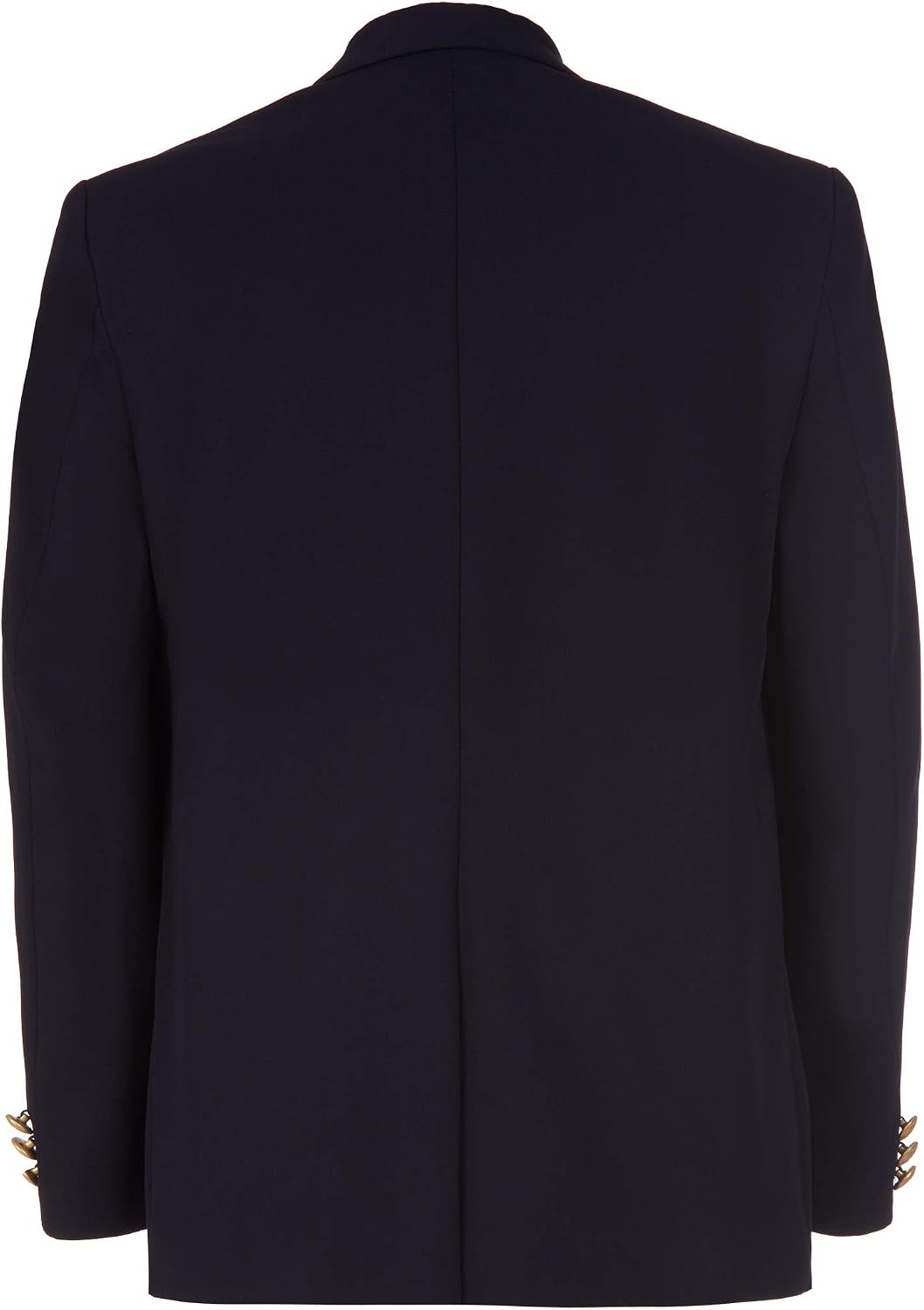
The note in the school welcome packet said “Academy Formal uniform required” for the first chapel service — and if you’re reading this three days before that date, you’re not alone. “Academy Formal” is one of those phrases private and independent schools use to mean something very specific internally but almost never define clearly in writing. In plain terms, it usually signals a step up from everyday uniform wear: a structured school blazer (a tailored jacket bearing the school’s crest or in the school’s designated color, worn over dress shirt and tie), formal trousers or a pleated skirt, and dress shoes. The problem is that the blazer — the centerpiece of this look — has sizing logic that’s genuinely different from anything you’d buy at a regular clothing store. Get it wrong and you’re either turning away from the morning assembly because a sleeve is two inches too short, or you’ve bought a size up “for room to grow” and your child is swimming in fabric at the collar. This guide explains exactly how to read blazer sizing for formal school requirements, where the common mistakes happen, and how to make the call when you’re caught between two sizes or two vendors.
What “Academy Formal” Actually Requires From a Blazer
Before you can size correctly, you need to know what the garment is expected to do. Dress code language like “Academy Formal,” “Class A,” “No. 2 Dress,” or “Full Formal” almost always implies a structured, lined blazer — not a cardigan, not a zip-front fleece, and not an unlined sport coat from a department store. The school’s handbook may specify:
- Crest or emblem placement (requiring the school’s own approved vendor, since the crest is embroidered to spec)
- Fabric weight (worsted wool — a tightly woven, smooth-finish fabric that holds its shape — versus a polyester-blend that’s lighter and easier to launder)
- Color matching (navy, black, or a house color that must match exactly, which is why off-brand blazers get turned away at the door)
- Button standard (brass or horn, school-crested or plain)
The National Association of Independent Schools (NAIS), in its member resources on dress code policy review, notes that schools increasingly use tiered dress terminology precisely to prevent interpretation ambiguity — but the implementation detail is almost always left to the vendor relationship. In practice, that means your school’s approved vendor list is the actual specification document, not the parent handbook.
Decision rule #1: If your handbook says “Academy Formal” but doesn’t name a fabric or vendor, call the school office before buying anything. Ask: “Which vendor’s blazer is acceptable for formal dress days?” That one question saves a return trip.
The Sizing System Is Not What You’re Used To
Here’s where most intermediate buyers — parents who’ve already bought polos and trousers from French Toast or Lands’ End School — run into trouble. Standard children’s clothing runs in age-based sizes (age 8, age 10) or simple measurements (28-inch waist). School blazers from heritage vendors run in chest sizes measured in inches, often with a separate slim or standard designation, and those numbers map very differently to age.
Flynn O’Hara Uniforms’ School Uniform Sizing Guide lays this out in detail: a boy measured at a 30-inch chest will land in their size 30, which corresponds roughly to an average 10-year-old — but a slim-build 12-year-old with a 28-inch chest should still order a 28, not size up to match his age peers. The fit at the shoulder seam is non-negotiable: on a properly fitted blazer, the shoulder seam sits exactly at the edge of the shoulder bone, with no overhang and no pulling inward. If you size up for growth room, you lose that shoulder alignment, and the entire jacket drapes incorrectly — which is visible and which most schools will flag.
Dennis Uniform’s Fit & Measurement Reference makes a key distinction that’s easy to miss: their blazer sizing separates chest from sleeve length in a way that everyday brands don’t. A child with a 30-inch chest and longer arms may need a 30 Regular versus a 30 Short — and ordering the wrong one means a sleeve that hits mid-hand or rides up past the wrist cuff. Measure both.
By the numbers:
| Chest (inches) | Approx. age range | Common fit errors |
|---|---|---|
| 26–28 | Ages 7–9 | Sized up “to last two years” → shoulders too wide |
| 30–32 | Ages 10–12 | Slim vs. regular not specified → torso bunching |
| 34–36 | Ages 12–14 | Adult sizing crossed → wrong cut entirely |
| 38+ | Ages 14–16+ | Junior vs. men’s cut mixed up → armhole too low |
Trutex Ltd.’s Product Specification and Sizing Standards documentation, which covers their UK-origin school blazer line, adds another layer: their sizing uses a height + chest matrix rather than chest alone, which means a tall, narrow-chested child who orders by chest only will receive a jacket that’s correct at the chest but short in the body. If your school’s approved vendor is Trutex or a Trutex-aligned brand, use both measurements.
The Growth Room Trap (and How to Actually Navigate It)
Every parent wants to buy a blazer that lasts two years. That’s a reasonable goal — at $80 to $250+ per piece, you’re not replacing this annually if you can avoid it. The problem is that the “buy a size up” instinct that works reasonably well for trousers and polos actively fails on blazers, for a structural reason.
A blazer is cut to fit at three fixed points: the shoulder, the chest, and the sleeve length. Trousers have a waistband you can let out, hems you can drop. A blazer has none of those adjustment points in standard form. If you buy a size 32 on a child with a 28-inch chest, you haven’t bought yourself two years — you’ve bought a garment that looks wrong today and will still look wrong in a year because the shoulder seam can’t be moved inward by a standard tailor without a full re-construction.
The legitimate growth strategies, per aggregated guidance from Flynn O’Hara and Ramsdens School Uniforms’ Heritage Blazer Collection spec documentation, are:
-
Buy accurate to shoulder and chest; let the sleeve run slightly long. A half-inch of extra sleeve can be taken up temporarily with a few stitches inside the cuff and let down later. A half-inch of extra shoulder cannot be corrected.
-
Ask the vendor explicitly about sleeve allowance. Flynn O’Hara builds a modest seam allowance into their sleeve hems on select models. Ramsdens’ heritage blazers are similarly documented as having a one-inch drop allowance in the sleeve. This is not universal — ask before you order.
-
Plan on two blazers over four years, not one blazer for four years. The cost-per-wear math actually supports this: a $150 blazer worn correctly for two years across 40 formal days per year is $1.88 per wear. A $150 blazer bought a size too large, worn poorly for four years, costs $0.94 per wear on paper but generates school-compliance notes and visible fit issues every formal day — a cost that doesn’t show up on a spreadsheet but absolutely shows up in the morning drop-off line.
Decision rule #2: If you are between two sizes, buy to the shoulder. Then ask the vendor whether sleeve allowance exists in that model. Never buy to the chest at the expense of the shoulder seam.
Vendor-Specific Tradeoffs You Need to Know
Not all approved blazer vendors size or construct the same way, and if your school’s list includes more than one option, the choice between them is a real decision with real tradeoffs.
Flynn O’Hara is the most common vendor on East Coast and Midwest private school approved lists. Their blazers are generally mid-weight wool-poly blend, run true to their published chest sizing, and have a slightly fuller cut through the torso that accommodates the dress shirt and tie layer without pulling. Owners and parents in school community forums consistently describe the fit as reliable across seasons, though the torso fullness can make slim-build children look boxy if not sized down appropriately.
Dennis Uniform offers both a standard and slim cut in many blazer styles, which is a meaningful differentiator for pre-teen boys who haven’t yet hit a growth plateau. Their vendor resource portal notes that slim-cut blazers run approximately one size smaller in the torso than their standard equivalent — meaning a child who measures 30 inches at the chest may wear a 32 slim. Confirm this directly with Dennis before ordering.
Trutex and Ramsdens are more common on schools with British-heritage curricula or affiliations. Their sizing, as noted, runs on a height-plus-chest matrix. The construction quality at the upper end of their range — worsted wool, full lining, horn buttons — is consistently cited in school coordinator reviews as superior for longevity, which is relevant for the cost-per-wear calculation over a longer holding period.
Decision rule #3: If your school lists both Flynn O’Hara and Dennis Uniform as approved, and your child is slim-build, request Dennis’ slim-cut size chart before assuming Flynn O’Hara’s standard sizing will work. The cut difference is significant enough to affect the formal-day presentation.
The Handbook Gap: What to Ask Before You Order
The NAIS dress code policy review resource observes that the gap between policy language and purchasing clarity is one of the most common friction points in school-family uniform relationships. “Academy Formal” language in particular tends to be imported from British independent school tradition without the accompanying specification detail that would make it actionable for parents.
Here is the short list of questions to ask your school’s uniform coordinator before placing any blazer order:
- Which vendors are approved for formal-day blazers specifically? (The approved list for everyday uniform sometimes differs from formal requirements.)
- Is a school crest required, and is it pre-applied by the vendor or added separately?
- Is there a minimum fabric weight or composition requirement?
- Are there formal-day sleeve length or trouser break standards that would affect sizing decisions?
- What is the school’s policy if a blazer is clearly outgrown mid-year — is there a grace period?
Getting these answers in writing (an email reply is sufficient) means that if your child is turned away on formal day for a non-compliant piece, you have a clear record of what you were told. It also means you’re making the size decision with complete information rather than guessing at what “Academy Formal” means to your specific school.
Final decision rule: If the blazer is for a child within six months of a growth spurt (rapid growth in the preceding year is the clearest signal), buy accurate to today’s shoulder measurement, confirm sleeve allowance with the vendor, and budget to replace in 18 months rather than trying to engineer a two-year fit. The formal-day presentation cost of an ill-fitting blazer outweighs the replacement cost every time.