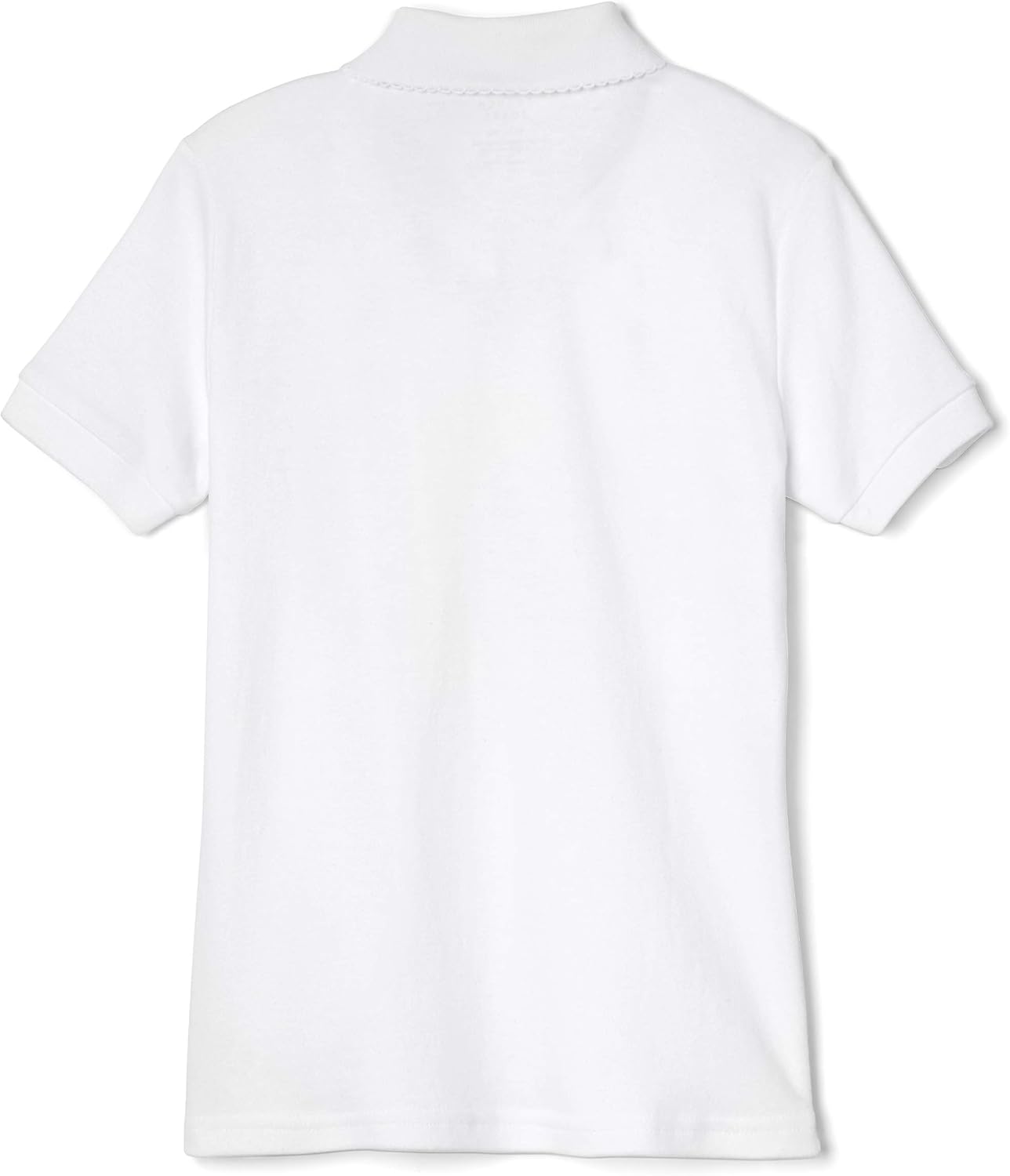
You’ve just received a three-page dress code packet from your daughter’s new school, and somewhere in the middle it says something like “girls may wear approved polo shirts or peter pan collar blouses on non-formal days.” Simple enough — except when you pull up the vendor site and find six different polo variations staring back at you: standard pique (the classic, flat-knit polo everyone pictures), ruffle-collar polos (which have a small decorative ruffle or flutter trim at the neckline instead of the typical ribbed collar), pintuck styles, lace-trimmed options, and a few hybrids in between. If you buy the wrong one and the school’s handbook or uniform coordinator considers a ruffle collar a decorative embellishment rather than an approved polo collar, you’re making that return trip in August — right when every other family is doing the same thing. This guide breaks down the structural differences between polo collar styles, shows you exactly what dress code language typically permits or restricts each one, and gives you a clear decision framework so you can order with confidence.
Why Collar Style Is a Policy Question, Not Just a Fashion One
Most parents assume a polo is a polo. But from a dress code enforcement standpoint, collar construction matters quite a bit, and schools that bother to specify it at all tend to mean it.
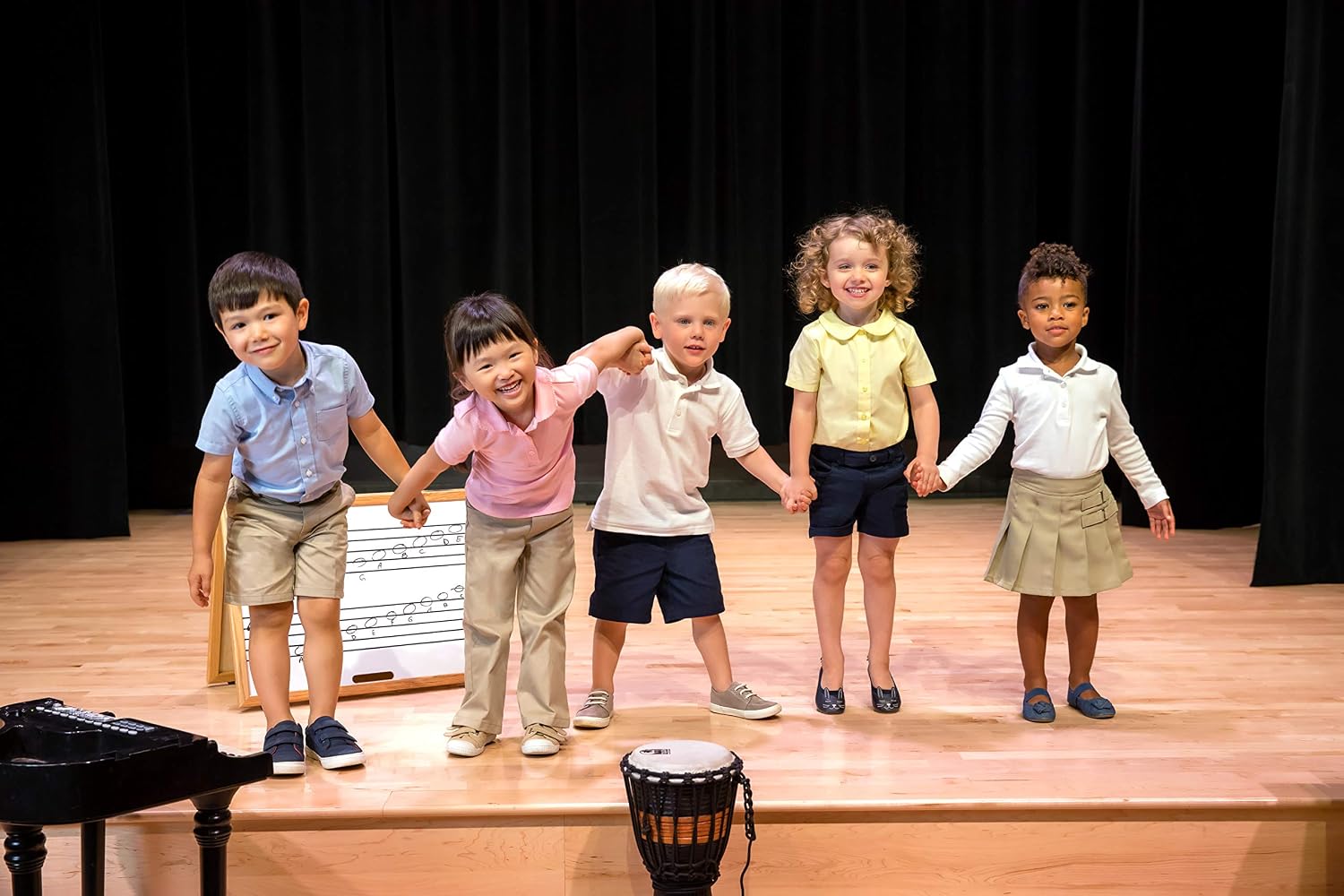
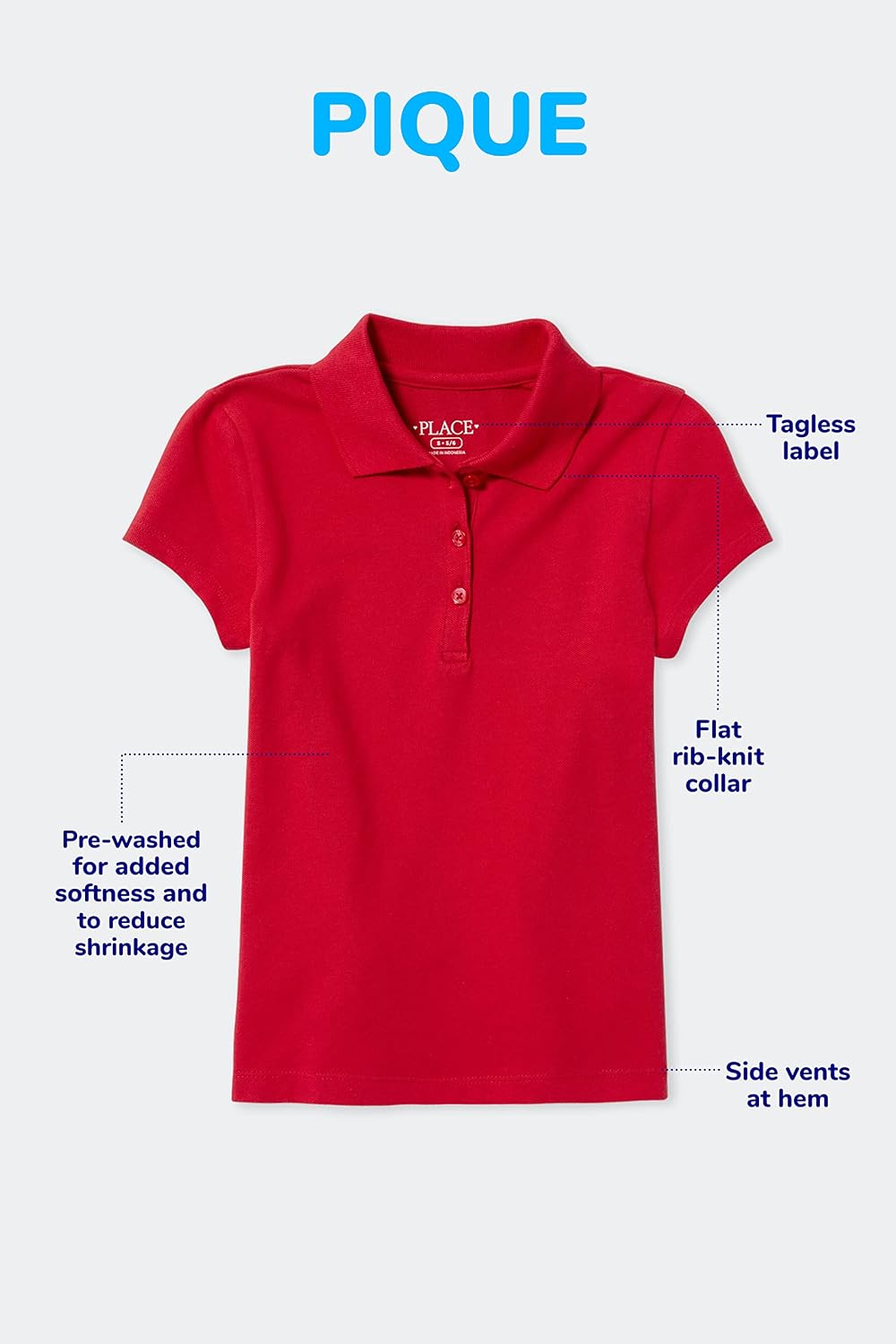
A standard pique polo gets its name from the fabric weave — pique (pronounced “pee-KAY”) is a textured, waffle-like knit that gives the shirt its characteristic slight stiffness and breathability. The collar on a standard pique polo is a folded, ribbed band — it lies flat, points forward slightly, and has a 2- or 3-button placket at the front. This is the collar style virtually every school dress code is picturing when it says “polo shirt.”
A ruffle-collar polo keeps the same pique or interlock body but replaces that flat ribbed collar with a gathered or pleated fabric ruffle around the neckline. Depending on the manufacturer, the ruffle can be subtle — a quarter-inch of soft fabric scallop — or more pronounced, with a layered flutter that reads closer to a decorative blouse. French Toast School Uniforms and Dennis Uniform both carry versions across this range, and the difference between a conservative ruffle and a fashion-forward one is significant enough to affect policy compliance.
The practical stakes: if your school’s handbook language is permissive (“polo-style shirts in approved colors”), a modest ruffle collar almost certainly qualifies. If the handbook says “traditional polo collar only” or lists an approved vendor SKU by name, you need to verify before purchasing.
Reading the Dress Code Language: Four Patterns You’ll Actually Encounter
School handbooks aren’t written by fashion editors. The language varies wildly from institution to institution, and the same physical shirt can be permitted at one school and flagged at another. Four recurring structures appear consistently across parochial and independent school handbooks.
Pattern 1: Open polo language “Girls may wear solid polo shirts in navy, white, or hunter green.” This is the most permissive framing. “Polo shirt” is the only style descriptor, with no collar qualification. A standard pique, a ruffle collar, and even a modest pintuck front all fall within this language — as long as the color and fabric weight are appropriate. If your school uses this pattern, you have real flexibility. The ruffle collar is generally fine.
Pattern 2: Vendor-specific or SKU-specific language “Approved tops are available from [School Name] School Store or from Dennis Uniform Style #XXXX.” This is the most restrictive and also the clearest. Buy what they say. If the approved SKU is a standard pique, a ruffle collar from a different product line is not an equivalent substitute even if it looks similar. Flynn O’Hara Uniforms’ Partner School Policy Compliance Guide explicitly notes that families ordering off-list styles — even from the same brand — may be asked to replace them. Don’t test this.
Pattern 3: Collar-qualified language “Polo shirts with a traditional flat collar are acceptable; decorative collars, lace trim, or embellishments are not permitted.” This is the pattern that most directly affects ruffle-collar decisions. The word “decorative” is the pivot point. A pronounced ruffle will fail this standard. A very subtle micro-ruffle in a matching fabric might be a judgment call — but when something is a judgment call at school drop-off, the answer is usually to default to the standard pique. The National Association of Independent Schools’ Dress Code Language and Equity Considerations, 2024 Edition notes that ambiguous language tends to be interpreted inconsistently at the enforcement level, which is a real problem for families who spent $28 on a shirt.
Pattern 4: Formal/informal tiered language “Class A (formal) uniform days require the white blouse or oxford. Class B (everyday) uniform days permit approved polo styles.” If your school uses a tiered system — often labeled Class A/B, Dress/Everyday, or No. 1/No. 2 — ruffle collar eligibility almost always applies only to the informal tier. On formal days, the specified blouse is usually a peter pan collar or oxford, and neither a standard pique nor a ruffle collar is a permitted substitute. Make sure you’re buying for the right tier.
Style-by-Style Comparison: Budget, Mid-Tier, and Premium
The decision between standard pique and ruffle collar isn’t just about compliance — it’s also about durability, launderability, and your child’s daily comfort across a 180-day school year. Here’s how the two styles compare at each spending tier, with approximate retail prices for spring 2026.
Budget Tier: Entry-Level Options (French Toast School Uniforms)
At the entry price point, French Toast School Uniforms offers both standard pique and ruffle-collar polos. Standard pique runs approximately $10–$14; ruffle-collar versions run $12–$18. The price delta is modest, but the durability gap is more meaningful. Standard pique at this tier holds its shape reliably because the collar is a single folded rib with minimal gathered fabric to distort. Entry-level ruffle-collar polos use lighter-weight interlock fabric for the ruffle itself, which can lose definition after 20–30 wash cycles if machine-dried on high heat. French Toast School Uniforms’ product descriptions recommend cold wash for ruffle-collar styles; at the budget tier, that care requirement is worth factoring into your decision. For families buying four or five shirts to manage laundry rotation, a standard pique at this tier offers the most forgiving care routine.
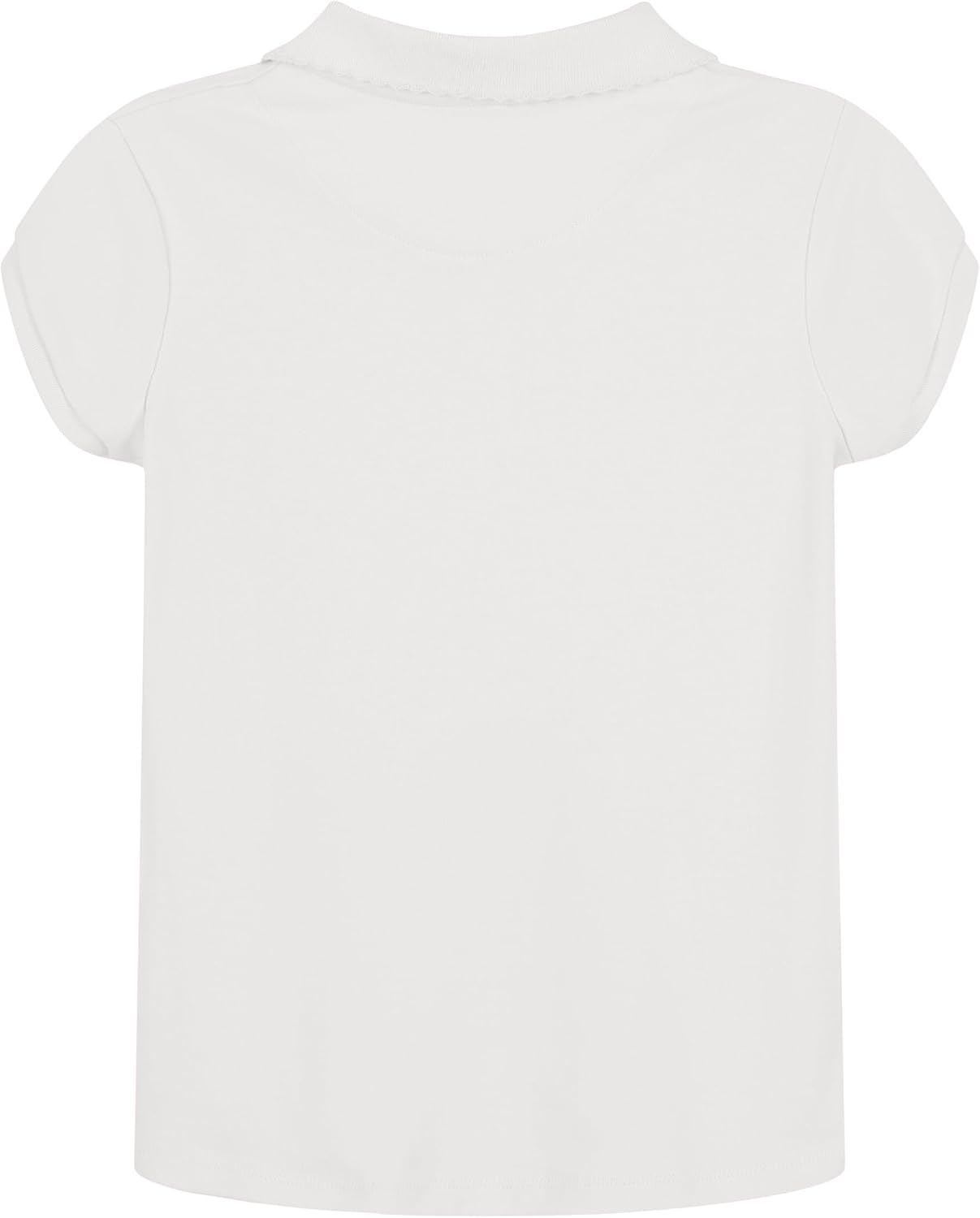
Nautica
$7.98
In stock on Amazon
Check price on AmazonMid-Tier: The Practical Sweet Spot (Lands’ End School, Dennis Uniform)
The mid-tier — Lands’ End School and Dennis Uniform, both in the $22–$42 range depending on style — is where most families end up, and where the ruffle-collar polo makes its strongest case. Lands’ End School’s fabric specifications for their girls’ ruffle-collar polo use a heavier interlock collar fabric than entry-level options, which holds its shape through repeated washing when cold-washed and laid flat to dry. Dennis Uniform’s Girls’ Tops Sizing and Style Reference, 2025–2026 notes that their ruffle-collar polo runs approximately a half-size longer in the torso than their standard pique equivalent — relevant if your daughter is between sizes and you need consistent tucking length. At the mid-tier, both styles are well-constructed enough to last a full school year with reasonable care. The ruffle collar reads as slightly more polished at drop-off, which can matter on days when schools distinguish informally between dress levels even if the tier designation is the same.
French
$8.05
In stock on Amazon
Check price on AmazonPremium Tier: School-Store and Uniform-Specialist Options (Flynn O’Hara)
At the premium end — Flynn O’Hara and equivalent school-store-exclusive lines, roughly $32–$52 — the construction gap between standard pique and ruffle collar narrows considerably. Premium ruffle-collar polos use the same weight pique fabric for both the body and collar ruffle, which means the collar behaves far more predictably in the dryer than entry or mid-tier versions. The more meaningful premium-tier consideration is policy compliance: Flynn O’Hara’s Partner School Policy Compliance Guide makes clear that their premium lines are often the basis for school-specific approved SKU lists. If your school has a Flynn O’Hara partnership and an approved SKU, that SKU is the answer regardless of collar preference. At this tier, buying off the approved list is a compliance risk that no construction quality advantage justifies.
The
$25.00
In stock on Amazon
Check price on AmazonDurability, Fit, and Laundry: The Practical Tradeoffs
Beyond compliance and price, two operational factors matter most across a full school year: washability and tucking behavior.
Wash cycles. Standard pique is largely indifferent to dryer use at normal settings because the collar has no gathered fabric to pucker or pull. Ruffle collars — particularly the more pronounced styles at entry and mid-tier price points — can develop permanent puckering if machine-dried on high heat. Lands’ End School’s care specifications for their ruffle-collar polo explicitly recommend cold wash and lay-flat drying to preserve collar shape. If your laundry routine involves high-heat drying and you’re not willing to change it for school shirts, the standard pique is the more practical choice regardless of dress code permissiveness.
Tucking. Many schools that require polos also require them to be tucked. Standard pique polos tuck cleanly because the hem is a flat-band shirttail. Ruffle-collar polos sometimes have a slightly longer, curved hem — which can actually make tucking more secure — but proportions vary by manufacturer. The half-size torso length difference noted in Dennis Uniform’s sizing reference is worth checking against your daughter’s measurements before ordering, especially at mid-tier where the size run may not have the same half-size increments as standard pique lines.
How to Verify Before You Buy: A Five-Step Protocol
-
Pull the exact dress code language — screenshot or PDF the relevant paragraph. Do not rely on memory or last year’s version; schools update handbooks annually and collar language has been revised at several major parochial networks in the past two years.
-
Check the approved vendor list for SKU specificity. If a style number is listed, that number is your answer. If only a brand is listed, you have latitude but should still match collar category to the spirit of the code.
-
Email the uniform coordinator, not the main school office. A two-sentence email (“We’re considering a ruffle-collar polo for everyday uniform days — is this compliant with our current dress code?”) takes three minutes and produces a paper trail. Flynn O’Hara Uniforms’ Partner School Policy Compliance Guide recommends exactly this step for any non-standard polo style.
-
Order one shirt before ordering the season’s supply. Cost-per-wear math strongly favors buying three to five polos per child to manage laundry rotation — but that math collapses if all five shirts are non-compliant. Buy one, confirm it passes muster at drop-off or with the coordinator, then complete the order.
-
Check the return window against your school’s start date. Most uniform vendors offer 30-day return windows; French Toast School Uniforms extends to 60 days for unworn items. If you’re ordering in late July for an August start, your return runway is short. Ordering in May or June gives you time to exchange without panic.
The Decision Rule
If your school’s dress code uses open polo language with no collar qualifier → the ruffle collar is almost certainly fine. Choose whichever style your daughter prefers and confirm once with the coordinator.
If your school’s dress code specifies “traditional,” “flat,” or “standard” collar, or prohibits decorative embellishments → buy the standard pique. The ruffle collar is a compliance risk that isn’t worth the $6 price difference.
If your school issues approved vendor SKUs → match the SKU exactly. Full stop.
If your school uses a tiered dress system (Class A/B or equivalent) → buy a standard pique for the formal tier and evaluate ruffle-collar eligibility only for the informal tier, with coordinator confirmation.
The ruffle-collar polo is a genuinely practical everyday uniform option — slightly more polished at the neckline, comfortable to wear, and well-constructed at the mid-range price point from brands like Lands’ End School and Dennis Uniform. But it earns its place in your daughter’s uniform drawer only when it’s actually permitted. The standard pique is the universal baseline, accepted everywhere, durable across a full school year with minimal care fuss, and the right default when there’s any doubt.
Buy the right collar the first time, and August stays calm.