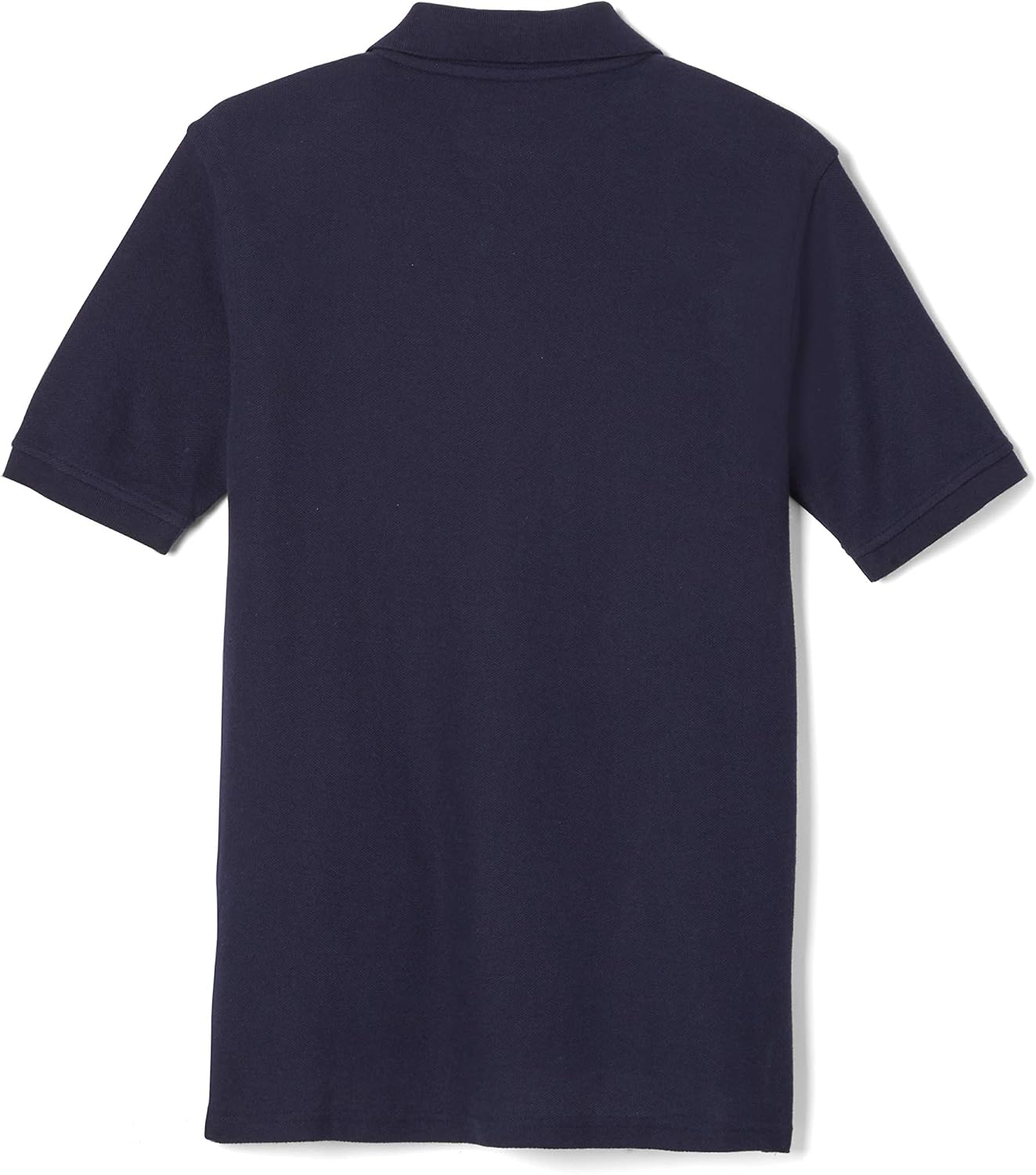
It’s a Wednesday evening in October. You’re doing the weekly laundry check — that routine scan of the hamper before tomorrow’s school day — and you realize there are zero clean, approved polo shirts left. Not one. Your child has three in rotation, one is stained beyond rescue, one is still damp in the dryer, and one somehow vanished. Tomorrow is picture day. This is the polo quantity problem, and it hits almost every private school family at least once.
A “polo shirt” in the uniform context means a short- or long-sleeved knit shirt with a small collar and two or three buttons at the neck — the kind that shows up on virtually every K–12 private and parochial school’s approved dress code list. Schools specify them in particular colors (navy, white, and hunter green are the most common) and often restrict them to an approved vendor list, meaning you can’t just grab any polo off a department store rack. The goal of this guide is simple: help you calculate exactly how many you actually need, show you the math that justifies buying more than feels comfortable, and give you a clear decision framework for balancing budget against the very real cost of running short.
Why Three Polos Is Almost Always the Wrong Number
Three feels rational. It covers Monday, Tuesday, and Wednesday, with laundry happening mid-week. The problem is that this math assumes perfect conditions — no spills, no PE grass stains, no forgotten laundry, no days when your kid wears the collar inside out and the school sends a note home. Real school weeks don’t run on perfect conditions.
Lands’ End School’s uniform buying guide for parents (published on their school portal) recommends a baseline of five polo shirts per child for a standard five-day school week — one per day — with their team noting that families who purchase seven to eight shirts report the fewest mid-week wardrobe emergencies. That guidance tracks with what uniform coordinators at Dennis Uniform echo in their sizing and care documentation: plan for laundry to happen once per week, not twice, and build your quantity around that rhythm.
Here’s where practitioners who have been through at least one full school year start to build better intuition than first-timers: the real quantity driver isn’t days-per-week. It’s rotation pressure — the combination of how fast shirts wear out, how often accidents happen at a specific age, and how forgiving your school’s dress code enforcement is on borderline items like a faded collar or a small bleach spot.
By the numbers — the baseline quantity formula:
| Grade band | Minimum polos | Recommended | If PE is daily |
|---|---|---|---|
| Pre-K – Grade 2 | 5 | 7–8 | 8–10 |
| Grades 3–6 | 5 | 6–7 | 7–8 |
| Grades 7–12 | 4 | 5–6 | 6–7 |
The PE column matters more than it looks. Children who change into gym clothes and back into their uniform polo (common at lower-school levels) actually reduce single-shirt staining risk — but at schools where students wear their polo through PE, a single afternoon of relay races on a hot day can retire a shirt to the “too funky for school” pile by Thursday.
The Cost-Per-Wear Argument (And Why It Should Change Your Order Size)
This is the math that most parents skip, and it’s the single most persuasive reason to buy eight instead of five.
An entry-level French Toast approved polo runs roughly $8–$12. A mid-tier Dennis Uniform or Lands’ End School polo runs $18–$28. A premium embroidered polo from Flynn O’Hara, with the school crest stitched at the chest, typically lands in the $28–$40 range depending on the school’s contracted pricing.
If you buy five French Toast polos at $10 each — $50 total — and each shirt survives about 40 wears before it’s too stained or worn to pass dress code inspection, your cost per wear is $0.25 per shirt day. If you buy eight at the same price — $80 total — but each shirt now cycles through less frequently, owners consistently report extended shirt life: shirts worn every 8 days instead of every 5 days last noticeably longer before collar fray and fabric pilling become visible. That incremental investment of $30 more at the start of the year often delays the mid-year emergency replacement purchase that ends up costing $35–$45 in expedited shipping alone.
Consumer Reports’ school clothing durability coverage notes that cotton-piqué polo fabrics (the standard material for most approved school polos) show measurable wear acceleration when washed more than twice per week, because repeated machine washing — especially with hot water used to remove stains — degrades the knit structure faster than regular once-weekly laundering. More shirts in rotation means each shirt washes less often. That’s not an intuitive connection, but it’s a real one.
The cost-per-wear math in plain terms: buying three extra polos at the start of the year costs $30–$60 more upfront and typically eliminates one mid-year panic purchase of $50–$90 including expedited shipping. For families in the $400–$1,200 annual uniform spend range, this reframe is usually enough to move the order from five shirts to seven.
How Vendor Timing Affects Your Quantity Decision
This is where practitioners need to think differently from first-time buyers. The quantity question and the when to buy question are not separate decisions — they’re the same decision.
Flynn O’Hara’s back-to-school ordering timeline (per their parent FAQ documentation) historically shows that school-specific embroidered polos — the ones with your school’s crest — move to limited availability or extended lead times beginning in late June, with some school programs closing custom embroidery orders as early as July 10–15 for August delivery. If your school requires crested polos specifically (not just a solid color), ordering in May or early June is not early — it’s on time.
Dennis Uniform’s regional distribution model means availability varies significantly by market. Families in markets with a Dennis Uniform retail location can often walk in through mid-July and find full stock, but their own sizing and care documentation advises ordering online no later than July 1 for standard August school starts, noting that sizes 6–8 boys and 7–10 girls historically sell out first.
The practical implication for quantity planning: if you’re ordering crested or school-specific polos, order your full projected quantity in one transaction. The risk of coming back in September for two more shirts in the right size is real. Flynn O’Hara and similar heritage vendors prioritize pre-season orders; restock timelines for specific school programs mid-semester can run four to six weeks.
For plain approved-color polos from French Toast or the Lands’ End School catalog — shirts without school-specific embroidery — availability is more forgiving through the fall. These can serve as a buffer stock strategy: order your crested shirts early and in full quantity, supplement with approved plain polos from a more liquid source if you need extra shirts quickly mid-year.
Building Your Quantity Decision Rule
Here’s the framework to apply to your specific situation. These are explicit tradeoffs, not rules that work for everyone.
If your school requires crested or embroidered polos only: Order 7–8 shirts minimum, all at once, before July 1. The embroidery lead time and mid-season restock risk make undershooting expensive. The extra $60–$80 of upfront spend is nearly always less than the cost of expedited reorder plus the stress of a non-compliant uniform week.
If your school accepts approved solid-color polos from multiple vendors: Order 5–6 crested or premium polos for the first-choice vendor, then hold 2–3 French Toast or similar budget-tier polos in the approved color as your rotation buffer. This hybrid approach keeps your per-shirt average cost lower while protecting you from mid-week shortages.
If your child is in Pre-K through Grade 3: Add two shirts to whatever number you’d otherwise order. Full stop. Good Housekeeping’s school uniform stain removal guidance documents that the hardest uniform stains — art supplies, grass, cafeteria food — cluster heavily in the early elementary years, and the volume of staining incidents per week at this age is genuinely higher than parents of older children remember. Many families in this grade band find seven or eight shirts necessary, not aspirational.
If your child participates in daily PE in uniform: Add one shirt per PE day per week above your baseline. A child with PE five days a week needs a polo quantity calculated as if they attend school six days, not five.
If budget is genuinely constrained: Prioritize quantity over brand tier. Five French Toast polos at $10 each outperform two Flynn O’Hara polos at $35 each on pure rotation math. The premium shirt is worth it when you can maintain quantity — it’s not worth it when it means running out by Thursday.
A Note on Sizing Ahead
One variable that experienced uniform buyers account for — and that first-timers almost never do — is buying one size ahead for the spring semester. Children in the 8–12 age range frequently size up mid-year. Buying eight polos in a single size in August and having four become too snug by February cuts your effective inventory in half at the worst possible time (mid-year reorders face the same lead time pressures as August without any of the early-bird availability).
The practical approach: buy six polos in the current confirmed size in August. Buy two in the next size up, labeled and set aside. Pull them into rotation in January or whenever the fit shift becomes visible. This staggers your investment and keeps you from the mid-year scramble.
Dennis Uniform’s sizing guide notes that their polo measurements run close to true-to-size on chest width but can run slightly short in body length at the larger youth sizes — worth checking the specific school’s approved vendor chart rather than relying on last year’s size alone.
The polo quantity problem is solvable, and the solution isn’t complicated: it’s buying more than feels necessary in August, before stock tightens, using the cost-per-wear math to justify the upfront spend. Most families who’ve been through two or three school years land naturally at seven to eight polos per child. You can get there in year one instead of year three — the arithmetic is on your side.