You got the letter from school in June. By August you have the list, the vendor portal, and a child who has opinions — very loud opinions — about the polo that “scratches my neck” and the trousers with the waistband that “squeezes too hard.” If this is your first year navigating sensory sensitivities alongside a strict dress code, the combination can feel impossible. Sensory sensitivity (the term used when a child’s nervous system processes touch, pressure, or texture more intensely than most people do) is not a phase, and it’s not pickiness. According to Understood.org’s overview of sensory processing, roughly one in six children experiences sensory differences significant enough to affect daily routines — meaning this is a real, common challenge in private school families, not an edge case. The good news: the uniform market has quietly gotten much better at meeting these kids halfway. This guide maps exactly what to look for, which brands and product lines actually deliver, and how to make the call when your school’s approved list doesn’t include every option you wish it did.
What “Sensory-Friendly” Actually Means on a Uniform Label
Before you can shop strategically, it helps to decode the product language. “Sensory-friendly” is not a regulated term — any brand can use it — so you need to know which features actually reduce friction for touch-sensitive kids.
Tag elimination. The single most common trigger is the woven care label sewn into the collar or waistband. Look for “tagless” or “label-free” construction, where care info is printed directly onto the fabric (a heat-transfer print) rather than sewn in. French Toast School Uniforms publishes tagless construction as a standard feature on most of their polo line, and parents consistently report this as the first thing that reduces morning resistance.
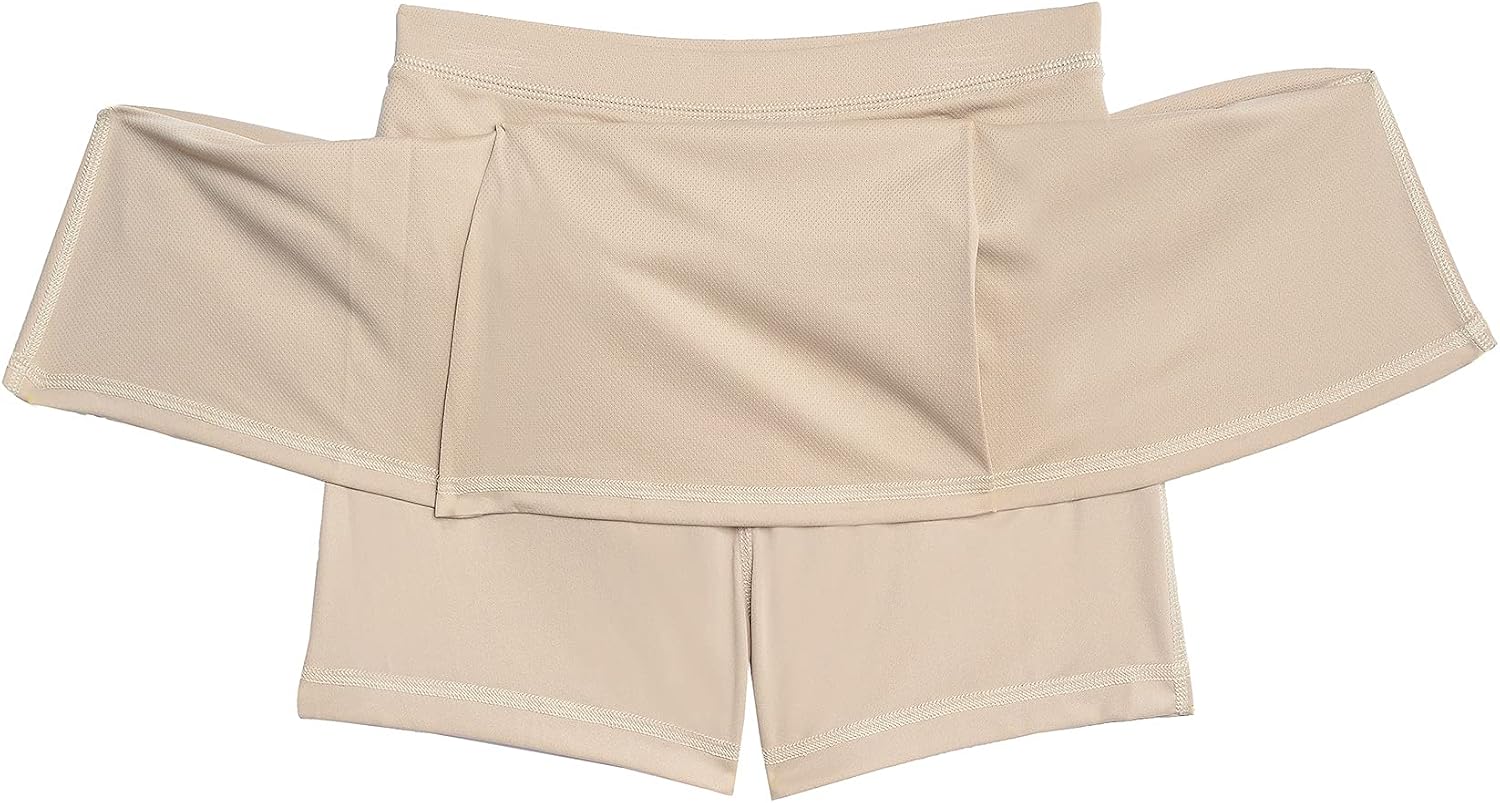
Waistband construction. Two features matter here. First, a pull-on or “comfort” waistband — fully elasticized, no button, no zipper at the front — removes pressure points entirely. Second, an adjustable internal waistband (a set of internal buttons that draw the waistband in or let it out) is the compromise option: it keeps a more traditional external appearance (important for formal dress codes) while allowing the child to find a fit that doesn’t bind. Dennis Uniform’s published product specifications describe their adjustable waistband as standard on most twill trousers and skirts, which is a meaningful practical advantage.
Fabric weight and texture. A fabric’s “hand” — how it feels against skin — varies significantly even within the same fiber type. Jersey-knit polo fabric (like a soft T-shirt) reads as significantly less irritating than a woven piqué polo (the one with the tiny raised squares). If your child can tolerate piqué at all, a finer piqué weave (smaller squares, softer hand) is better than a coarser one. Polyester-cotton blends at 60/40 or 65/35 ratios tend to feel softer and hold their shape better than 100% cotton, which can stiffen after repeated washing. Lands’ End School publishes fabric content on all product pages and has a dedicated “Sensory-Friendly” category in their 2025–2026 school assortment — worth bookmarking as a benchmark even if Lands’ End isn’t on your school’s approved list.
Seam placement and construction. Flatlock seams (seams stitched so both edges lie flat, creating a smooth surface) are the gold standard. Standard overlocked seams create a raised ridge that sits against the skin. This matters most at the shoulder seam, the side seam, and the waistband join.
Sock and shoe adjacency. Worth flagging even though this guide focuses on the uniform pieces themselves: the American Occupational Therapy Association’s fact sheet on sensory processing and school performance specifically notes that seamed toes in socks are a disproportionate trigger for sensory-sensitive children. Seamless sock options have proliferated and are easy to find within most schools’ general dress code parameters.
Brand-by-Brand: Where to Find These Features on Approved Vendor Lists
Most private school uniform approved lists include at least two or three of the major national vendors. Here’s how the main players stack up against the sensory-friendly checklist.
French Toast ($8–$25 range) French Toast’s tagless polos are genuinely useful at the entry price point. Owners consistently report that the tagless construction and soft interlock knit fabric make the polos a workable starting point for touch-sensitive kids. The limitation: their formal items (dress shirts, blazers) use more traditional construction. If your school’s approved list includes French Toast and allows their polo styles to meet the “dress polo” requirement, this is the right place to anchor the everyday rotation.
Dennis Uniform ($25–$65 range) Dennis Uniform has made adjustable waistbands standard on their trouser and skirt lines, and their published catalog notes comfort-fit elastic options on select bottoms. For families whose child is most sensitive at the waist, Dennis is the most practical mid-range solution. Their fabric blends lean toward polyester-cotton combinations that hold up well through institutional washing cycles — relevant if your child is prone to sensory dysregulation when clothes feel “wrong” after laundering.
Lands’ End School ($30–$80 range) Lands’ End is the clearest leader in actively marketing sensory-friendly features. Their published 2025–2026 product notes describe tagless construction, a dedicated sensory-friendly filter on their school shop portal, and a modified flatlock seam approach on select items. Parent reviewers in multiple school community forums consistently name Lands’ End’s performance polo as the item that finally solved the collar problem for their child. The trade-off is price — their mid-range position means you’re paying more than French Toast for the polo tier — and not every school’s approved list includes Lands’ End as a vendor.
Flynn O’Hara ($65–$200+ range) Flynn O’Hara specializes in school-crested and heritage-style pieces — blazers, jumpers, formal dress uniforms. Their published fabric content skews toward wool and wool-blend fabrics for blazers and formal items, which creates a genuine challenge for sensory-sensitive children. Wool’s natural fiber variation means the hand can range from fine merino (soft, tolerable for many sensitive kids) to a coarser school-weight worsted (a dense, durable weave used in blazers that tends to feel rougher against skin). Flynn O’Hara’s construction is traditional — woven labels, structured linings — which is by design for the heritage price point, but parents should plan to address labels immediately at home (careful seam-ripping of collar labels is a common workaround). If your child needs a Flynn O’Hara blazer because it’s on the approved list, the practical strategy is: buy the blazer, remove or fold back the neck label on day one, and layer a soft tagless undershirt beneath it as a barrier layer.
The Decision Matrix: How to Prioritize When Your Approved List Is Fixed
Here’s the honest reality for most families: you don’t get to shop purely on sensory criteria. The school’s approved vendor list narrows your options, and within that list, the specific dress code requirement (formal blazer, specific color polo, knife-pleat skirt) narrows them further. So the decision framework isn’t “what’s the most sensory-friendly uniform in the world” — it’s “what’s the most sensory-friendly version of the exact items my school requires.”
By the numbers: sensory-friendly feature coverage by vendor tier
| Vendor | Tagless standard | Adjustable waistband | Soft-knit polo option | Flatlock seams noted |
|---|---|---|---|---|
| French Toast | Yes (most polos) | Limited | Yes | Not published |
| Dennis Uniform | Partial | Yes (trousers/skirts) | Yes | Not published |
| Lands’ End School | Yes (most items) | Yes | Yes | Yes (select items) |
| Flynn O’Hara | No | No | N/A (no polo line) | No |
Use this as a triage tool, not a final verdict — verify against the current season’s published specs before ordering.
If X, then Y — the decision rules:
-
If the child’s primary trigger is collar tags: Prioritize Lands’ End or French Toast for the polo rotation. Budget $5 of your time on day one to seam-rip or iron-flat any remaining labels on non-tagless pieces.
-
If the primary trigger is waistband pressure: Dennis Uniform’s adjustable waistband trousers are your first call. If the approved list doesn’t include Dennis, look for any vendor’s “comfort waistband” or “pull-on” option within the approved style; most major vendors carry at least one.
-
If the school requires a formal blazer from a heritage vendor: Accept that the blazer itself won’t be sensory-optimized, and engineer around it. A tagless, fine-knit undershirt creates a barrier layer. Some families have success with a thin seamless compression undershirt (worn as a base layer under the dress shirt, under the blazer) — the consistent light pressure can actually be regulating for some sensory-sensitive children, per the American Occupational Therapy Association’s guidance on deep-pressure input.
-
If you’re building a full kit from scratch and have some vendor flexibility: Anchor on Lands’ End School for the highest volume items (polos, everyday trousers) where sensory exposure time is longest. Spend up on the formal pieces only where the dress code genuinely requires it, and treat those pieces as short-duration wear to be managed, not solved.
-
If the child’s sensory profile affects multiple dimensions (touch AND proprioception — the sense of body position and pressure): Loop in your child’s occupational therapist before finalizing the kit. The AOTA notes that sensory profiles are highly individual; what regulates one child may dysregulate another. An OT can give you specific fabric and fit parameters that go beyond what any buying guide can generalize.
One More Practical Note: Wash Before You Wear, Always
Across aggregated parent reviews on Lands’ End School and Dennis Uniform product pages, one consistent finding is that new uniform items often feel significantly softer after the first wash. Sizing can also shift slightly — particularly with 100% cotton items. Build two washes into your pre-school prep timeline, not one. This is especially relevant for sensory-sensitive children, because presenting a stiff, new-fabric-smelling uniform on the first day of school is an avoidable stressor. Order early enough (by late June for fall, based on historical Dennis Uniform and Flynn O’Hara availability windows) to allow for washing, wearing around the house, and any returns or exchanges before September.
The combination of the right fabric features, a realistic approved-list strategy, and a little pre-season prep genuinely moves the needle. The goal isn’t a perfect uniform that disappears from your child’s awareness — it’s a uniform that takes up less of their cognitive load so they can actually focus on school.